Handout B: Character Cards
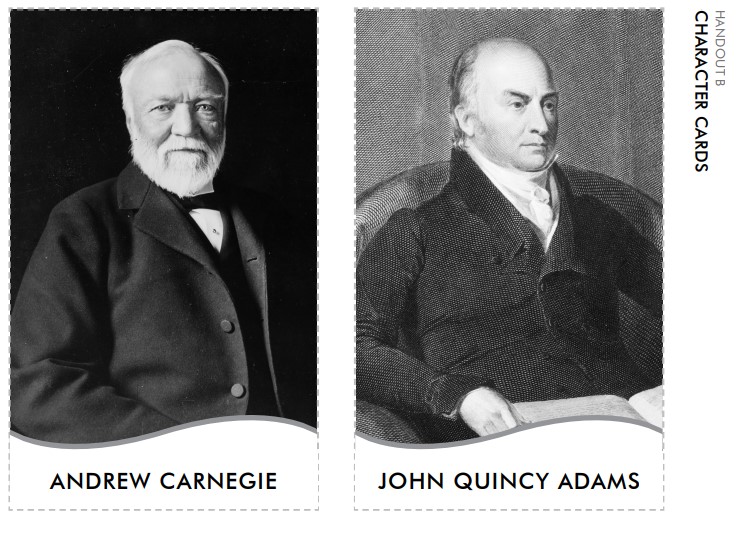
Andrew Carnegie (1835 – 1919)
Andrew Carnegie’s rags-to-riches story is one of perseverance, initiative, and resourcefulness. Carnegie was born in 1835 to a working-class Scottish family. He came to the United States with his family when he was thirteen years old. He began working right away: as a messenger, a bobbin boy, and steam machine operator. In 1853 he took a job as telegraph operator at a railroad company. He was charming and intelligent. He took an active interest in his work and quickly advanced at the company.
Carnegie also took the initiative to learn about investing. He wisely invested his money in equipment and technologies that he believed were good for to the railroad industry. In 1889, he founded the Carnegie Steel Company. This company combined with others to create U.S. Steel. U.S. Steel helped meet the country’s great demand for steel—used in railroads, skyscrapers, and other examples of great technological achievements. He literally helped build America.
Later in life, Andrew Carnegie became a philanthropist (someone who helps actively others). He used his fortune to found the Carnegie Corporation of New York, Carnegie Endowment for International Peace, and Carnegie Mellon University in Pittsburgh.
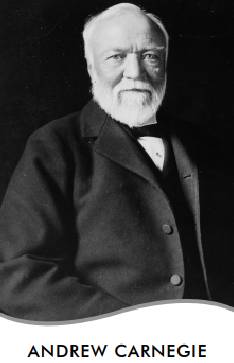
John Quincy Adams (1767 – 1848)
Some believe John Quincy Adams’s most heroic contribution to his country came after he was President. Adams was born in Massachusetts in 1767. He was the son of President John Adams. After serving in various offices, including the Presidency, John Quincy Adams was elected to Congress in 1830.
In 1835, the House of Representatives voted to table (postpone without hearing) any petitions about slavery. Adams, then in his mid-seventies, was still vigilant. He led a small group of Representatives in the fight against the Gag Rule. Adams said that whatever one’s position on slavery, the Gag Rule was a violation of the First Amendment’s protection of freedom of petition. “[T] he stake in the question is your right to petition, your freedom of thought and of action, and the freedom in Congress of your Representative,” he declared. The Gag Rule had to be renewed each session, and Adams courageously fought against it each time. Over those nine years, Adams was accused of treason and even received death threats. But he never backed down.
The Gag Rule was repealed in 1844, due in part to John Quincy Adams’s courageous fight for the First Amendment right to freedom of petition.
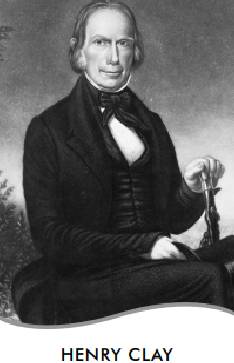
Henry Clay (1777 – 1852)
Henry Clay’s perseverance and moderation earned him his reputation as the “Great Compromiser.” Clay was raised with his eight siblings in Hanover County, Virginia. With little formal schooling, he was trained as a lawyer. He saw opportunities on the expanding frontier, and moved west to Kentucky in 1797. He found great success, and was known as an eloquent and courteous speaker.
The new frontier brought great challenges as well as opportunities. Clay represented Kentucky in both the House and Senate. As a lawmaker, he put the integrity of the Union first. He made a deal in the Senate to lower tariffs slowly when South Carolina threatened to secede (leave the nation) in response to the Tariff Act. As Speaker of the House, he helped lead the young nation through struggles over slavery. Clay was able to calm the bitterness on both sides to secure passage of the Missouri Compromise and the Compromise of 1850. He helped pass laws he hoped would allow the nation to survive.
He died in 1852, a year after leaving Congress. Henry Clay’s commitment to his country as a whole was made clear on his headstone: “I know no North— no South—no East—no West.
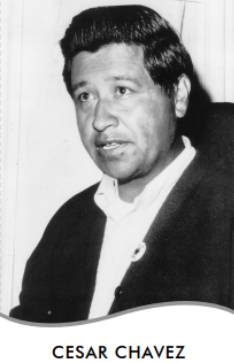
Cesar Chavez (1927 – 1933)
Cesar Chavez struggled throughout his life for better working conditions for union farm workers. He was born in Yuma, Arizona. His parents lost their farm in the Great Depression, and the family moved from place to place, working the fields. He attended thirty-seven different schools. These early experiences left their mark and gave his life purpose. His father had been injured in a car accident, so after eighth grade, young Chavez became a farm worker to help support his family.
In 1962, Chavez founded and organized the National Farm Workers Association, later called the United Farm Workers. This union was the first of its kind, and fought for contracts, safe conditions, higher wages, and job security for union members. He led a nationwide boycott of grapes that increased support for the United Farm Workers. In a movement called La Cosa, he brought together churches, unions, and consumers. His motto was “Si, se puede.” (“Yes, it can be done.”)
A humble and deeply religious man, Chavez’s hunger strikes, boycotts, and marches got America’s attention, and improved the lives of thousands. Though his critics point out that unionized farm labor resulted in great numbers of willing migrant workers being turned away from jobs, Cesar Chavez’s perseverance brought the experiences of migrant workers to national attention.
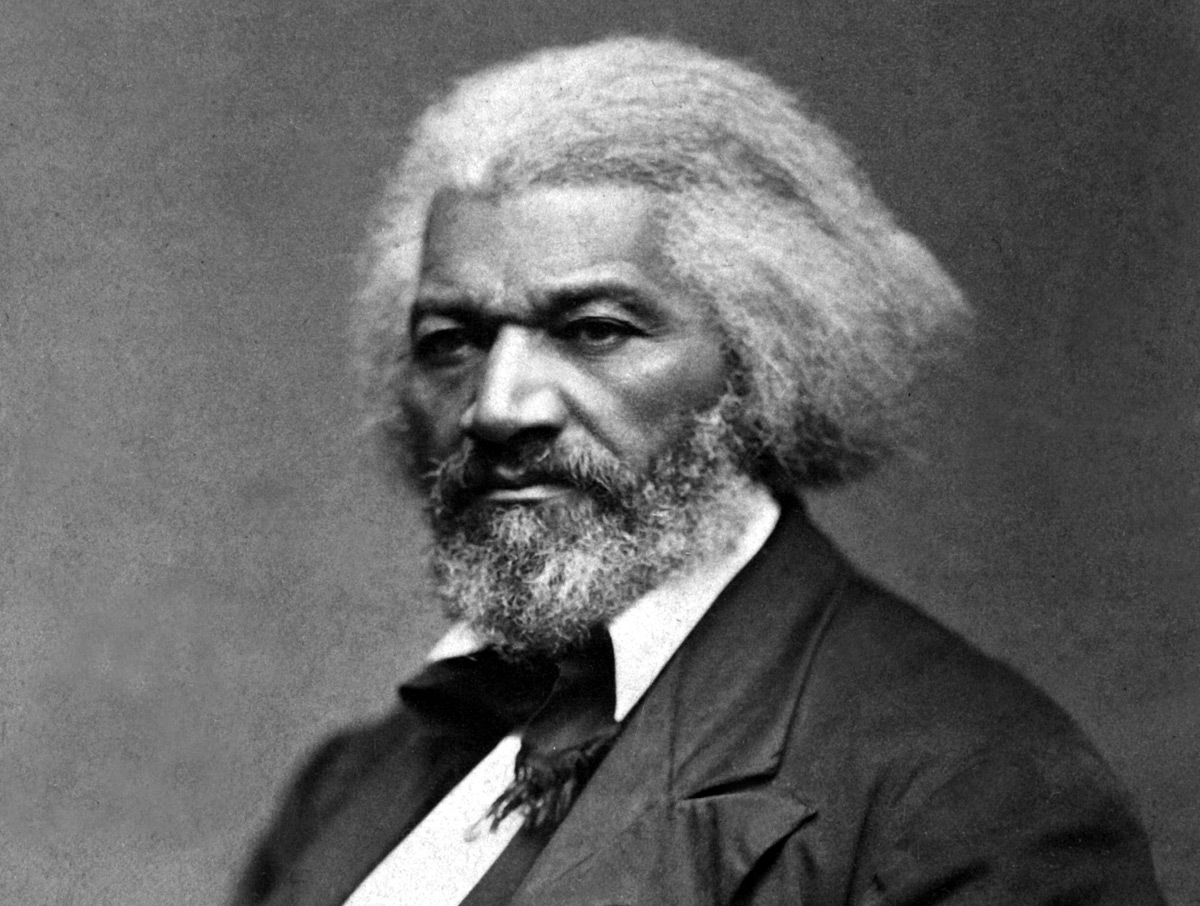
Frederick Douglass (1818 – 1895)
Frederick Douglass wrote and spoke about the injustices of slavery, and helped open the eyes of a nation. He was born a slave in Maryland, in 1817 or 1818. Although it was against the law to teach enslaved people to read, Douglass learned to read and also taught other slaves to do so. He knew that reading and learning would help people see that slavery was a great injustice. After two failed attempts, Douglass escaped from slavery in 1838.
Douglass settled in Massachusetts where he went to abolitionist meetings. He began giving speeches on his experiences, and soon he began traveled in America and Europe giving lectures. He also published his thoughts in a weekly newspaper. His most important work was his autobiography, Narrative of the Life of Frederick Douglas an American Slave, . It was very popular and, like his speeches, opened many peoples’ eyes to the horrors of slavery. Douglass advised two Presidents, Abraham Lincoln and Andrew Johnson, about the treatment of African Americans. He spoke and wrote in favor of a constitutional amendment securing voting rights and other liberties for former slaves.
Frederick Douglass persevered in his work for equal rights for former slaves, and also for women, until he died.
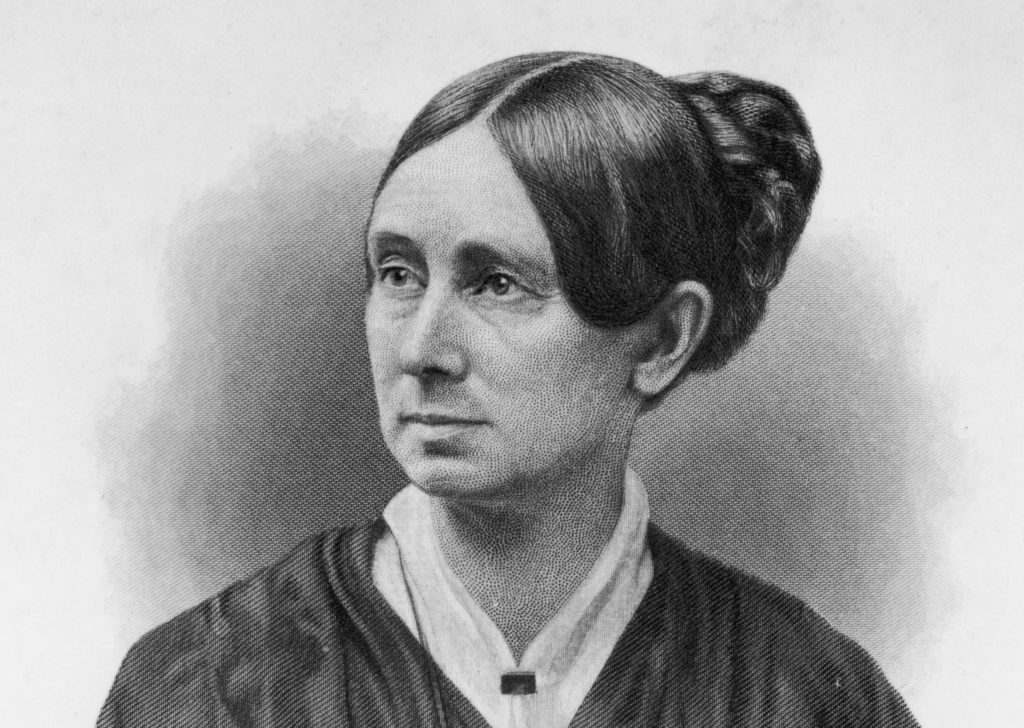
Dorothea Dix (1802 – 1887)
Dorothea Dix courageously fought for people who could not fight for themselves. Dix traveled to almost every state in the Union and visited over 9,000 people suffering from mental illness. She saw them cast out of society and largely ignored. She visited them in poorhouses, jails, dark cellars, and hovels. She saw many of them chained, frozen, starving, or neglected. Appalled by their treatment, she became a crusader.
From 1842 to 1887, Dix led a one-woman campaign for compassion. She wrote and spoke publicly about what she had seen. She was convinced that many patients, if treated well, could be cured. She also thought that government had a responsibility to help. Dix was successful in lobbying state legislatures. She was well-connected, soft-spoken, and persuasive.
In a time when women could be jailed for voting, Dix courageously championed her cause. She raised public awareness. Congress debated many of Dix’s petitions. Her first petition led to the construction of a state hospital in Massachusetts. Twelve other states and the District of Columbia followed suit. Dorothea Dix forever changed the way Americans care for the mentally ill.
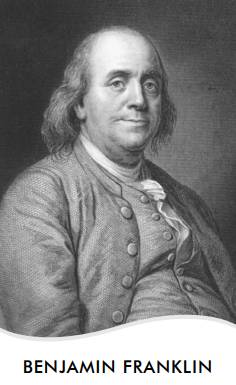
Benjamin Franklin (1706 – 1790)
Benjamin Franklin dedicated his life to improving the lives of his fellow citizens. He did this by creating goods, services, and a form of government. “The most acceptable service of God is doing good to Man,” he said. He lived by this principle—as a citizen, author, inventor, scientist, and statesman.
Franklin’s life was filled with firsts. He put his ideas in action to create the first fire department, the first public library, and the first public hospital in Philadelphia. He shared homespun humor and advice in his popular Poor Richard’s Almanack. He also improved peoples’ lives with his inventions. He made the first lightning rod, bifocal glasses, and iron furnace stove.
Yet Franklin made his greatest contributions to America’s first governments. He had a strong sense of responsibility and never refused a public office. To build the new republic, he served faithfully at the Second Continental Congress. He helped draft the Declaration of Independence. He helped negotiate the Treaty of Paris, ending the Revolutionary War. He joined the Constitutional Convention, where he stood up for a stronger union and worked hard to protect citizens from tyranny. Benjamin Franklin was optimistic about America’s future; and gave much of his life to help her grow.
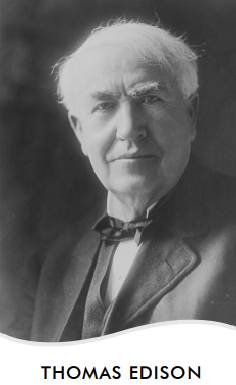
Thomas Edison (1847 – 1931)
Thomas Edison saw every obstacle as an opportunity. “Genius is 1% inspiration and 99% perspiration,” he said. He had little schooling, and was deaf from a young age, but he pursued his interests with resourcefulness and passion. He loved science and mechanics. He was driven to invent.
By 1868, Edison had improved the telegraph and the typewriter. He made an electric vote recorder and a stock ticker. Two years later, he had enough money to open his first “invention factory.” He was only twenty-three. He and the talented team of engineers and scientists he hired would change the world.
Within five years, they had perfected the telephone and created the phonograph. Next, they became famous for the incandescent light bulb. Later they worked on the motion picture camera, talking movies, a car battery, and an x-ray machine. In his lifetime, Edison registered 1,093 patents.
“The three essentials to achieve anything worthwhile are, first, hard work; second, stick-to-itive-ness; third, common sense,” Edison said. With a booming business and boundless enthusiasm, Thomas Edison helped bring America into the modern age.
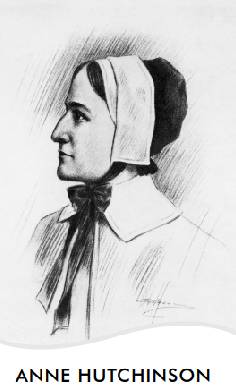
Anne Hutchinson (1591 – 1643)
Anne Hutchinson stood up to a religious theocracy (where the church and the government are the same) in defense of religious liberty. A well-educated minister’s daughter, Hutchinson came to the Massachusetts Bay Colony in 1634. She became a midwife, and she made friends. Soon she began to invite women to her home for Bible study.
Over the years, Hutchinson attracted a following. Almost sixty people, both men and women, joined her group. The discussions at her home soon became more like sermons. She criticized the teachings of the colony’s ministers. For anyone—and especially a woman—to go against the official religion of the colony was a crime. Colony ministers charged Hutchinson with eighty- two “erroneous opinions.” But she did not keep silent. She courageously defended her beliefs. In the end, Hutchinson was convicted and banished.
Hutchinson’s struggle helped spread the values of respect and religious liberty. In 1789, the Constitution banned religious tests for public office; the First Amendment, adopted in 1791, stopped the federal government from establishing a religion; finally, all the states ended their official churches by the early 19th century. Anne Hutchinson’s struggle helped religious liberty take root.
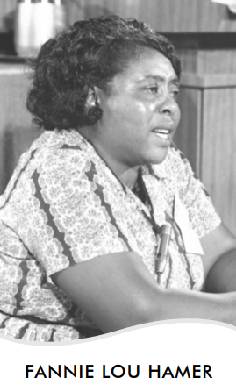
Fannie Lou Hamer (1917 – 1977)
Fannie Lou Hamer courageously fought for her right to vote. Hamer was born in Mississippi in 1917. In 1962 she attended a voter registration meeting. It was there that she first learned the Fifteenth Amendment protected African Americans’ ability to vote. She left that meeting determined to register to vote.
Hamer decided she wanted to help other African Americans participate in American democracy. She took the initiative to organize registration drives. On these drives, she became famous for singing hymns. In one 1963 drive, she was thrown in jail. Montgomery County guards beat her and fellow civil rights workers. She lost her job and even received death threats, but she persevered.
In 1964, Hamer spoke out at the Democratic presidential convention about people being illegally prevented from voting. A year later in 1965, President Johnson signed the Voting Rights Act. This law removed many barriers to voting, and many see it as a fulfillment of the Fifteenth Amendment’s promise. Fannie Lou Hamer’s courage and perseverance had never wavered.
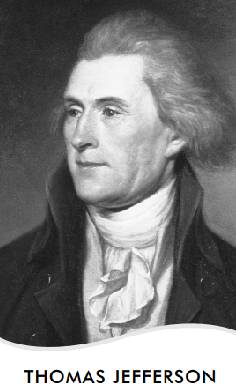
Thomas Jefferson (1743 – 1826)
Thomas Jefferson spent his life fighting for the integrity of each person’s beliefs, and the integrity of his country. Born in Virginia in 1743, he was a respected lawyer and writer. When he was 33 years old, Jefferson wrote and signed his name to the Declaration of Independence. The King considered this treason, but Jefferson and the other signers had the courage and integrity to stand by their beliefs.
Jefferson fought for the new nation’s promise to protect rights. He authored the Virginia Statue for Religious Freedom in 1786. This statute, which is still part of Virginia law, brought an end to the state church. Jefferson was serving in France while the Constitution was being drafted in 1787. But he stayed involved. He wrote letters to Convention delegates. He urged that a bill of rights be added to the Constitution. Years after the Bill of Rights was adopted, he fought against a 1798 law that made it a crime to criticize the federal government. Two years later, he was elected president.
After two terms as president, he retired to his home, Monticello. In 1819, Thomas Jefferson founded the University of Virginia, one of his proudest achievements.
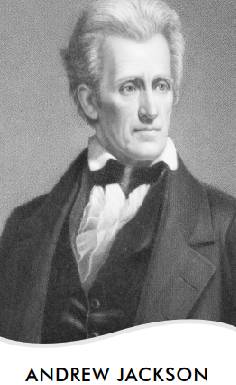
Andrew Jackson (1767 – 1845)
Andrew Jackson served his country with courage: as an Army General and as President. Jackson was born in 1767 near the North and South Carolina border. A young boy during the Revolutionary War, he fought as an “irregular.” He was captured by the British, and later released. These early experiences strengthened Jackson’s integrity and resolve.
Jackson continued serving his country in the military. He led victories against the Creek Indians, and most famously against the British at New Orleans in 1814. As an Army General, he became known as “Old Hickory.” After the war, Jackson became governor of the new Florida territory, which he had helped acquire from the Spanish.
As President, Jackson often clashed with other branches of government. He vetoed Congress’s re- charter of the National Bank, which he believed was a government-sponsored monopoly. He defied the Supreme Court. He even locked horns with his Vice President. But his refusal to compromise won him many admirers. Andrew Jackson was beloved by the people, winning 56% of the popular vote and five times as many electoral votes as his opponent in the election of 1832.
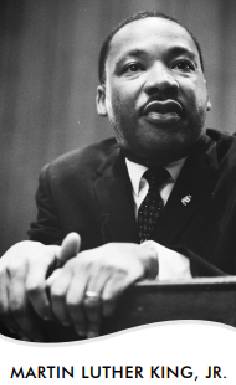
Martin Luther King, Jr. (1929 – 1968)
Martin Luther King, Jr. persevered for civil rights throughout his life. King was born in Georgia in 1929. He fought for desegregation and equal rights for African Americans by speaking out and leading marches. He always preached non-violence as a means for change.
The most important march of King’s career was the March on Washington in 1963. A quarter of a million people packed the National Mall. King stood on the steps of the Lincoln Memorial. In his speech, King referred to the “architects of our republic” and their commitment to freedom. He electrified the crowd with his speech, saying, “I have a dream that one day this nation will rise up and live out the true meaning of its creed: ‘We hold these truths to be self-evident, that all men are created equal.’”
In the years that followed, King led civil rights marches in Selma, Alabama. He always urged moderation in non-violence protest. King was awarded the Nobel Peace Prize in 1964. King was assassinated in 1968. Martin Luther King, Jr.’s funeral was attended by 300,000 people, and his courageous life continues to inspire people today.
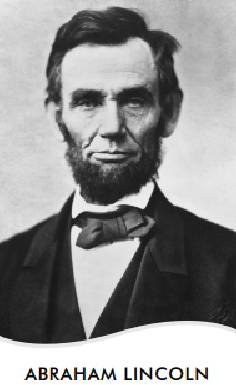
Abraham Lincoln (1809 – 1865)
Abraham Lincoln rose from obscurity to celebrity, from boyhood on the Kentucky frontier to President of the United States. Despite election defeats, he persevered in his pursuit of public office. In 1858, he became famous in debates over the western expansion of slavery. The nation could not survive half-slave, half-free, he said.
Elected on the eve of Civil War, Lincoln courageously led the nation through four bloody, tumultuous years. At Gettysburg in 1863, he inspired all Americans to recover the integrity of their country and its ideals. The United States was “conceived in liberty, and dedicated to the proposition that all men are created equal.” For his second inaugural speech, Lincoln stood on the East Portico of the Capitol, March 4, 1865. The end of the Civil War was in sight. Thousands had gathered to hear him. They expected a victory speech.
Lincoln surprised them. He called for forgiveness and unity. He knew the challenges the nation would face. Abraham Lincoln’s words echo through the ages: “With malice toward none; with charity for all…let us strive on to finish the work we are in, to bind up the nation’s wounds…” and arrive at a “just and lasting peace.”
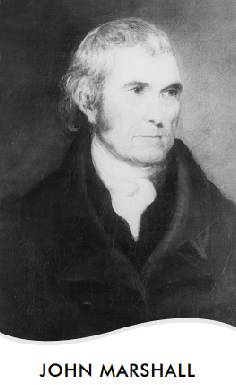
John Marshall (1755 – 1853)
As Chief Justice of the Supreme Court in the earliest years of the American republic, John Marshall had important responsibilities. Marshall was born in 1755 on the Virginia frontier. He served in the Revolutionary War, and later studied law.
Marshall wished for the new nation to be strong and unified. He knew the Articles of Confederation would not help this happen. He spoke out on behalf of the new Constitution in 1789. He was appointed to the Supreme Court by President John Adams. His role on the Court gave him the chance to interpret the Constitution and the system of government it created.
He wrote more than 500 opinions. His most important opinion was Marbury v. Madison (1803), in which Marshall explained that it was the Supreme Court’s job to “say what the law is.” This decision affirmed the power of judicial review. Many of Marshall’s rulings affirmed the power of the national government. His opinions are still cited by Supreme Court Justices today. They form the backbone of much constitutional law. Throughout his thirty-four years on the Supreme Court, John Marshall’s rulings supported the integrity of the new nation.
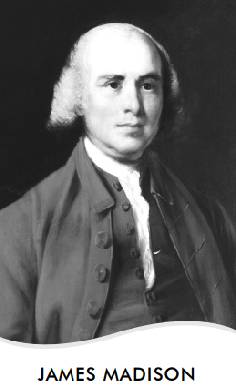
James Madison (1751 – 1836)
James Madison’s ideas formed the backbone for the United States’ plan for self-government. Madison, a wealthy Virginia planter, grew up small, thin, and sickly. Physically, he could not compete with many Founders. Intellectually, he was a giant.
Madison had the initiative and resourcefulness to nurture a nation in ways no one else could. In 1787, he was a leader at the Constitutional Convention. He took notes, spoke often, and helped people come to compromises. He was ever vigilant about the abuse of government power, and worked to prevent it. He was wise enough to be worried about factions. He suggested a system of checks and balances. He also worked to balance the power of the states and the federal government. Both are key parts of American government.
When the Constitution was sent to the states, Madison wrote newspaper articles to defend it. When it became clear that the Constitution would not pass without it, he drafted the Bill of Rights. Madison believed the new government was “the work of many heads and many hands.” History, however, has made James Madison famous as the “Father of the Constitution.”
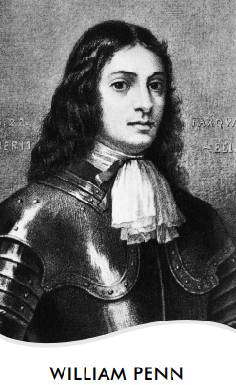
William Penn (1644 – 1718)
William Penn’s fight for religious liberty spanned four decades and two continents. At twenty-four years of age, Penn was imprisoned in the Tower of London in 1668 for life. But he was did not repent. “I owe my conscience to no mortal man,” he declared. A devout Quaker, he had been persecuted for his beliefs. Fortunately, Penn was well-connected. Within eight months he was released. He continued to write and give speeches. He continued to support religious toleration. He continued to protest efforts to force Englishmen to follow one faith.
As he grew older, Penn became interested in America. In 1681, the King gave him the largest remaining piece of land between New York and Maryland as payment of a debt to his father. Penn named the colony for his father, calling it “Pennsylvania” or Penn’s Woods. He advertised for colonists, and they came in droves.
Penn called it his “Holy Experiment.” As governor, he believed that good government could not force a faith or require conformity. Respect for individual beliefs and self-government, William Penn argued, would bring peace and prosperity to Pennsylvania— and they did.
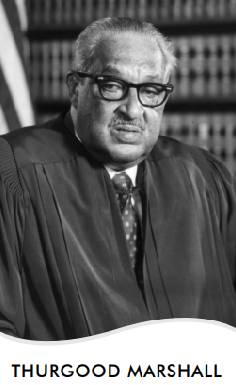
Thurgood Marshall (1908 – 1993)
Thurgood Marshall may be best known as the first African American Supreme Court Justice, but his courage and determination were clear long before his appointment to the Court. He was born in 1908, the grandson of a slave. He graduated from college with honors. In 1930, he was turned down at the University of Maryland because he was black. He completed law school at historically black Howard University.
Marshall decided to use his talents to end segregation in public life. His first legal victory came against the University of Maryland’s admission policy—the very school which did not let him in because he’s black. He became chief counsel for the National Association for the Advancement of Colored People (NAACP). Marshall and the NAACP began a legal campaign against segregation in public schools. This struggle ended when Marshall argued Brown v. Board of Education (1954) before the Supreme Court. This decision declared segregation in public schools unconstitutional.
Marshall was appointed to the Supreme Court in 1967, becoming the first African American Associate Justice. Thurgood Marshall spent almost a quarter century on the Court, supporting the Constitution’s protections for individual and civil rights.
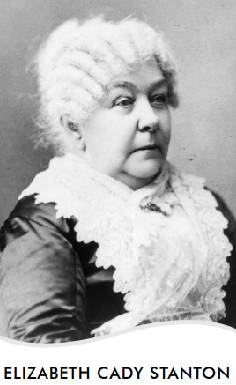
Elizabeth Cady Stanton (1815 – 1902)
Elizabeth Cady Stanton fought for the ideals of the Declaration of Independence—that all people are created equal. Stanton was born in New York State in 1815. She received a formal education, unlike most women of her time. She did well in school, impressing her teachers and classmates with her intelligence. But as a woman, she could not attend the college of her choice.
Stanton was disturbed by women’s lower legal status. She helped organize the first women’s rights convention in the US in Seneca Falls, New York. At that convention, the Declaration of Sentiments and Resolutions was read. This document, based on the Declaration of Independence and written by Stanton, declared the legal equality of men and women, and listed the legal rights women should have, including the right of suffrage (voting). Her work helped launch the women’s movement which eventually won women the right to vote.
Stanton knew she was fighting for something bigger than herself. She did not live to see the passage of the Nineteenth Amendment. Susan B. Anthony wrote when Elizabeth Cady Stanton died, “Mrs. Stanton was always a courageous woman, a leader of thought and new movements.”
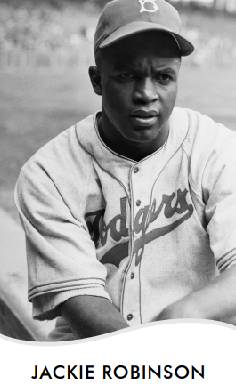
Jackie Robinson (1919 – 1972)
Jackie Robinson was born in Georgia in 1919. Abandoned by his father and raised with his four siblings by their mother, Robinson’s early life experiences were of segregation: in restaurants, movie theaters, and at school. His mother taught him self respect, courage, and perseverance. His athletic talents blossomed in high school. He excelled at many sports. As a player in the Negro American League, Robinson’s batting average approached .400.
Robinson signed on with the Brooklyn Dodgers in 1947, ending 80 years of segregation in professional baseball. Robinson knew it would be a tough road. Some players threatened to strike. When he was at bat, fast balls would narrowly miss his head. The crowd taunted him with racial epithets. His family received hate mail. But Robinson did not back down. And as time went on, his fellow ball players could not deny his talents and contributions to the team.
Robinson was a trailblazer in American sports. In 1997, on the anniversary of his first game, Major League baseball retired Jackie Robinson’s number— 42—as a testament to his courage and perseverance.
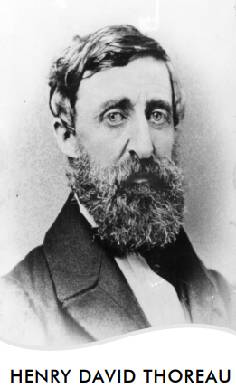
Henry David Thoreau (1817 – 1862)
As a writer, friend, and citizen, Henry David Thoreau lived a life of integrity and moderation. For over a year, Thoreau lived in a small bare cabin near Walden Pond, Massachusetts. In stark contrast to the Industrial Revolution going on around him, he wanted to live by Transcendentalist principles: simplicity, economy, and moderation.
Thoreau tried to live his life with this kind of integrity. In the mid-1800s, he opposed the United States’ war with Mexico. He believed that the war would lead to slavery’s expansion in the West. He did not want his tax money to support the war or slavery. When the Massachusetts government required that citizens pay a poll tax to vote, Thoreau refused. As a result, Thoreau was arrested. He spent a night in jail and wrote about it. “Under a government which imprisons any unjustly, the true place for a just man is in prison,” he argued. He believed he alone had acted responsibly as a citizen, by refusing to support an unjust war.
Throreau believed that one person, firm in his or her beliefs, can change the world. Henry David Thoreau’s words and actions have inspired generations of Americans.
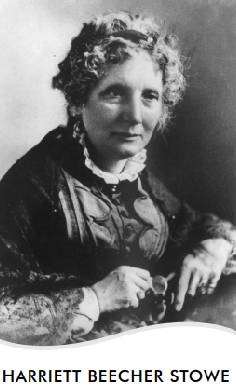
Harriet Beecher Stowe (1811 – 1896 )
Harriet Beecher Stowe used the power of her pen to open the eyes of a nation to the injustices of slavery. She was born in Connecticut in 1811. She lived in a Protestant, abolitionist tradition: her father a minister, her brother a theologian, her husband a clergyman.
When Congress passed the Fugitive Slave Act in 1850, Stowe knew she had to act. At the time, women had few ways to engage in politics. She could not run for office, or even vote, but she was undeterred. Ever resourceful, she found a political voice in her writings. She began to do research by interviewing former slaves and others who had personal experience with slavery. Her first novel, Uncle Tom’s Cabin, told of the abuse suffered by enslaved people and families in emotional, human terms.
Uncle Tom’s Cabin sold 10,000 copies in its first week, and was a bestseller in its time. She reached peoples’ hearts and minds in a way that politicians had not been able to do. Historians believe the publication of Uncle Tom’s Cabin sped up the outbreak of the Civil War, as more and more people believed the nation had a duty to end slavery. Harriet Beecher Stowe’s writing truly changed a nation’s view of justice.
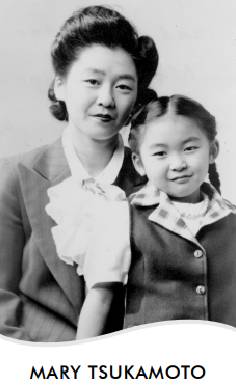
Mary Tsukamoto (left) (1915 – 1998 )
Mary Tsukamoto devoted her life to ensuring civil rights for all Americans. She was born in San Francisco to parents who had come to California from Japan. She attended a segregated school, and helped her family grow modest crops despite laws banning Japanese people from owning the land they farmed.
In 1941, the Japanese bombed Pearl Harbor and the United States entered World War II. President Roosevelt was concerned that people of Japanese descent might aid the Japanese. Roosevelt signed an Executive Order creating detention camps. 120,000 people of Japanese descent—most of them American citizens—were rounded up and forced to live in the camps. They lost their possessions, their livelihoods, and their dignity.
Tsukamoto worked to make sure the story of Japanese Internment would not be forgotten by history. She recorded her experience in a book: We the People: A Story of Internment in America. She also worked with the California History Museum and the Smithsonian Institution in Washington, DC to develop exhibits about Japanese Internment. Despite her experience, she remained committed to self-government. In 1990, Mary Tsukamoto wrote: “Only in a democracy can we correct mistakes. I am proud to be an American.
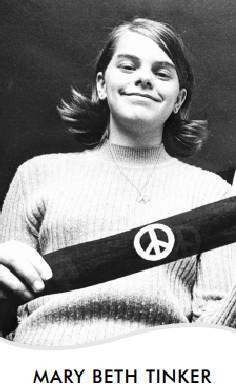
Mary Beth Tinker (b. 1952 )
Mary Beth Tinker fought for the right of students to respectfully express their personal views in public school. Tinker was a thirteen year old middle school student from Des Moines, Iowa in 1965. She opposed the war in Vietnam. She, her older brother John, and other students decided to wear black armbands to school to protest the war and mourn the dead. When they got to school, they were told they would be suspended from school until they returned without the armbands
Tinker believed the punishment she faced was unjust. She believed had a right to express her views in a respectful and non-disruptive way. She courageously wore the armband even though she knew she would be suspended. She refused to give up her fight. She and her brother took their case to the Supreme Court.
In Tinker v. Des Moines (1969) Tinker won her case. The Court said that the armbands were “akin to pure speech.” Schools must have the ability to keep order, but unless students truly disrupt school, they do not “shed their constitutional rights to freedom of speech or expression at the schoolhouse gate.” Mary Beth Tinker’s fight for justice became a landmark victory for public school students’ rights.
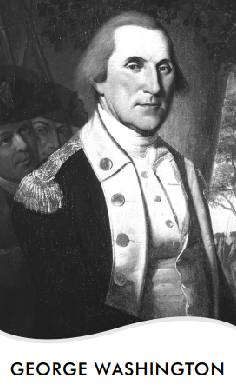
George Washington (1732 – 1799 )
George Washington wanted his presidency to be an example of moderation, just as he had lived his life. On September 19, 1796, Washington gave his Farewell Address. Although the Constitution did not limit the President’s term, Washington knew the system of checks and balances was designed to prevent abuse of power. The letter of the law did not forbid a third term, but he believed its spirit did.
The decision to step down kept with Washington’s character. Throughout his life, he worked to follow a set of strongly held values including moderation and responsibility. He was a hot tempered person, but he moderated his actions. He always answered the call of duty—as Commander in Chief of the Continental Army, and as president of the Constitutional Convention. And he always stepped down when the job was done. In fact, Washington warned against leaders with a “love of power” and the ability to abuse it. There was no greater danger to liberty, no greater peril for a free people.
The people wanted him to stay, but he knew he could not. He was aware that as the first president, everything he did would be setting an example for all the future presidents of the United States. By resigning, he was a model of moderation. To George Washington, the preservation of the American republic was more important than personal gain.
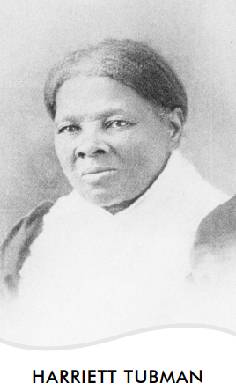
Harriet Tubman (1820 – 1913 )
Harriet Tubman, an enslaved field hand who could not read, escaped to freedom in 1849. Thirty years of poverty and abuse had left her small body battered and scarred. But her spirit was unstoppable. “There was one of two things I had a right to—liberty or death. If I could not have one, I would have the other,” she later said.
Not content with securing her own freedom, Tubman then turned to helping others escape. Although she faced death or re-enslavement if caught, Tubman became a “conductor” on the Underground Railroad in the 1850s. At first, she returned south to rescue her family. Over time, she saved hundreds of slaves. She was clever and gifted at avoiding capture, so successful that she was nicknamed “Moses.” Nineteen times, she made the dangerous 650-mile journey from Maryland to Canada. She was never caught, and “never lost a passenger.”
During the Civil War, she became a scout, spy, nurse, and cook. She recruited freedmen to the Union cause, and helped lead raids that freed hundreds more slaves. With unequalled courage, Tubman pursued liberty for every American, and in doing so became a legend.
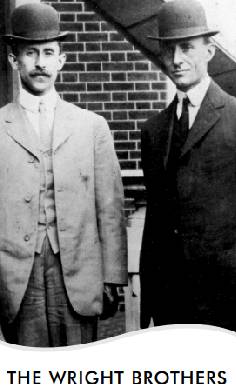
Wright Brothers
Orville Wright(1871 – 1948) Wilbur Wright(1867 – 1912)
Wilbur and Orville Wright’s resourcefulness and perseverance changed a nation—and the world. When the boys were young, their father brought home a toy that caught their interest: a rubber-band controlled helicopter. Their fascination with machines that helped people travel continued throughout their life.
People had dreamed of “flying machines,” but no one had ever been able to build one that could be controlled in flight. The Wright Brothers took the resources they’d earned from manufacturing and selling bicycles and put it into their dream of inventing an airplane. They experimented with wind tunnels. They hypothesized. They failed, and failed again. One failed attempt, a glider, was so disappointing that Wilbur almost gave up.
Then, on December 17, 1903, they succeeded. Their engine-powered airplane flew 120 feet, landing 12 seconds after takeoff. They patented their invention as a “flying machine,” and forever changed the world. Great distances could be spanned in days instead of weeks or months, ideas spread across the globe more quickly, and the modern age was ushered in due in part to the perseverance of Orville and Wilbur Wright.
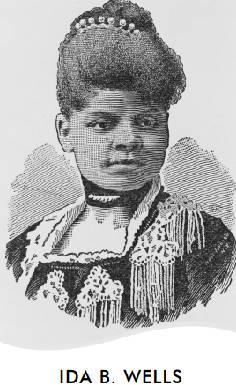
Ida B. Wells (1862 – 1931)
Ida B. Wells worked to bring national attention to ending the injustice of lynching. Wells was born in Mississippi in 1862, the oldest of eight children. Her parents died when she was 14, and she raised her younger siblings herself. She put herself through college and became a teacher in Memphis, Tennessee.
In 1892, Wells lost three close friends to a lynch mob. These gruesome killings made headlines, but no one was arrested or charged. As a journalist and a newspaper owner and editor, Wells courageously wrote about the racism that motivated such murders. The press attacked her as a “black scoundrel.” A mob ransacked her office and threatened her life, but she continued to speak the truth about lynching.
Wells later moved to Chicago where she published The Red Record, the first documented statistical report on lynching. She became a respected public speaker, and traveled widely. She co-founded the National Association for the Advancement for Colored People (NAACP) in 1909. Ida B. Well’s courage and perseverance helped end an on-going injustice, and brought about important change in the United States.